Addressing Adolescent Behaviour and Separation Anxiety
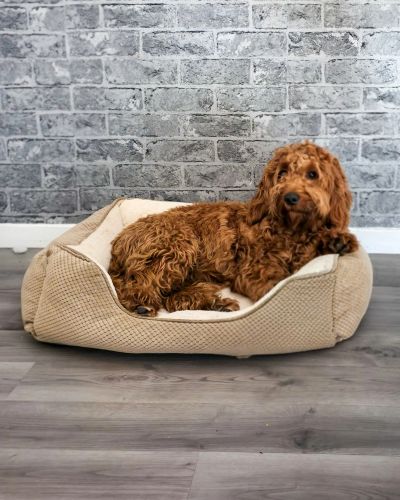
Cockerpoo Background
I first met Rusty when he was approximately 14 weeks old, when he joined our Basingstoke Puppy Club. From the beginning, Rusty showed excellent potential. He engaged well during sessions, responded positively to training, and displayed appropriate social behaviour around other puppies.
At this early stage, the focus was on building confidence, encouraging positive puppy socialisation, and creating strong behavioural foundations that would support him as he matured.
Rusty attended multiple Puppy Club sessions and consistently performed to a high standard.
His owners later completed a foundation training course with another provider, where they covered basic obedience skills. While this gave them a starting point, they found it difficult to progress Rusty’s training further or apply those skills reliably in real-world environments with distractions.
They then returned to Pup Pups Dog Training for additional support, enrolling in specialist courses including Loose Lead Walking Training and Recall Training. These sessions had a positive impact on Rusty’s engagement, focus, and responsiveness outdoors.
To continue progressing, Rusty’s owners booked a series of private one-to-one dog training sessions tailored to his individual needs.
Emerging Behaviour Challenges During Adolescence
At around 11 months old, Rusty began to show noticeable behavioural changes at home. This coincided with the school summer holidays, when household routines changed significantly due to the children being home more often.
His owners reported several concerns, including:
- Separation anxiety when left alone
- Destructive behaviour in the home during the owner's absence
- Increased overexcitement, including jumping at the kitchen table during mealtimes
- Difficulty settling indoors
- Reduced impulse control
These behaviours are common during canine adolescence, a stage where many dogs experience hormonal changes, increased sensitivity, and behavioural regression.
Behaviour Assessment and Training Plan
I carried out a detailed behavioural assessment to understand the root cause of Rusty’s challenges. It became clear that his behaviour was linked to a combination of:
- Increased arousal levels
- Inconsistent daily structure
- Difficulty coping with separation
- Lack of clear boundaries in key situations
- Adolescent overstimulation
A personalised dog training plan was created to help Rusty succeed, focusing on:
- Reintroducing structure and routine within the home
- Building independence and confidence when alone
- Reducing separation-related stress through gradual desensitisation
- Improving impulse control around food and family activity
- Strengthening engagement and calm decision-making
All training used positive reinforcement methods, ensuring learning remained effective, ethical, and confidence-building.
Progress and Results
After five structured private training sessions, Rusty’s owners reported clear and measurable improvements.
Key results included:
- Significant reduction in destructive behaviour when left alone
- Improved ability to relax and settle indoors
- Complete elimination of jumping at the table during family mealtimes
- Better emotional regulation and calmer responses
- Increased responsiveness to owner guidance
Rusty became calmer, more settled, and better equipped to cope with household changes and short periods of separation.
Puppy Socialization
Rusty’s case highlights how important continued support can be during adolescence. Many owners assume training problems mean a dog is being stubborn or difficult, when in reality they are often signs of a dog struggling with development, routine changes, or emotional regulation.
While Rusty’s early puppy training gave him a strong start, targeted intervention during adolescence helped him navigate this challenging stage successfully.
With the right structure, reward-based training, and owner consistency, adolescent issues such as separation anxiety, impulsive behaviour, and poor settling can be resolved.
Through a structured, reward-based approach, Rusty was able to develop more appropriate behaviours and coping mechanisms. Equally important, his owners gained the skills and confidence needed to maintain consistency and support his ongoing development.
This case demonstrates that with the right strategy and timely intervention, common adolescent challenges such as separation anxiety and impulsive behaviour can be successfully addressed, leading to a more balanced and harmonious home environment.
Client's 5-Star Review
Tom has been a great support, helping with our 11-month-old cockerpoo after the 6-week holiday when he developed separation anxiety. The 1-hour sessions are a great help, and the training plan he has written is above and beyond. We can say it's working