Rebuilding Confidence Overcoming Traffic-Related Anxiety
Behavioral Consultation
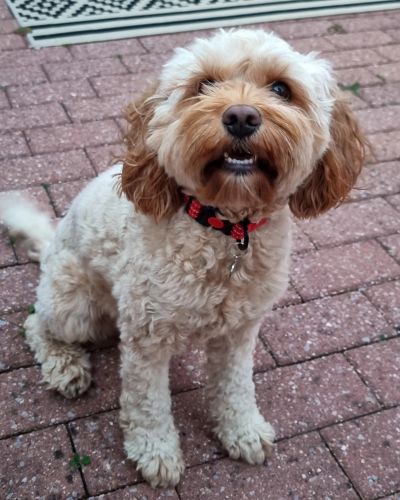
Ruby, a two-year-old Cavapoo, was referred due to significant distress and reactive behaviours when exposed to traffic and roadside environments. The owners live on a busy road in Basingstoke, and accessing their local playing field requires walking directly along this route, making the issue both unavoidable and highly impactful on daily life.
The root cause of Ruby’s behaviour was traced back to an incident during puppyhood. Whilst out on a walk, Ruby was startled by an unknown stimulus and bolted across a busy road at the same time as traffic lights were emitting an audible signal. This event created a strong negative association with both traffic movement and the sound of pedestrian crossing signals.
As a result, Ruby began to exhibit anxiety-driven behaviours when near roads, including pacing, circling, spinning, and lunging—behaviours that posed a serious safety risk given the environment.
Assessment and Dog Behavioural Analysis by Expert Dog Trainer Basingstoke
Following a detailed behavioural consultation, Ruby’s key triggers were identified as:
- Vehicles passing by in a close proximity to her
- Audible traffic crossing signals
- Narrow footpaths beside busy roads
- Anticipation of traffic movement
- High-stimulation outdoor environments
Ruby’s responses were consistent with fear-based reactivity, driven by low confidence and an expectation that these environments were unsafe.
This is a common issue in dogs who have experienced a traumatic event during a sensitive developmental stage.
Given the severity of the response and the safety implications, a structured and phased behaviour modification plan was implemented, with four key objectives:
- Reducing Ruby’s anxiety around traffic-related stimuli
- Rebuilding her confidence in outdoor environments
- Teaching alternative, appropriate behavioural responses
- Equipping the owners with the skills to safely manage and support Ruby
Tailored Dog-Training Plan
Phase 1: Environmental Management and Stress Reduction
Initially, exposure to the problematic environment was minimised to prevent further reinforcement of the reactive behaviour. For a short period, Ruby was taken from the house directly to the car and transported to quieter walking locations. This allowed her to continue receiving exercise and enrichment without triggering anxiety.
Reducing exposure to overwhelming triggers was an important first step in lowering overall stress levels.
Phase 2: Controlled Counter-Conditioning
We began structured counter-conditioning work in low-traffic areas. Ruby was gradually exposed to mild versions of her triggers at a distance where she remained below threshold. Positive reinforcement was used to create new, neutral-to-positive associations with both the presence of traffic and related sounds.
Simultaneously, the owners were coached on leash handling techniques, timing of reinforcement, and reading Ruby’s body language to better anticipate and manage her responses.
Phase 3: Gradual Reintroduction
Over a six-week period, we systematically increased the level of exposure. This included:
- Gradually decreasing distance to traffic
- Introducing more realistic roadside scenarios
- Reintroducing the specific route from the home to the playing field
Each session was managed to keep Ruby below her stress threshold, ensuring confidence continued to grow rather than setbacks occurring.
Fear and Dangerous Behaviour Improvements
The results were highly positive. At the start of training, Ruby would lunge, spin, panic, and attempt to move into the road when exposed to traffic or crossing signals.
By the end of the programme:
- Ruby was able to walk calmly and confidently along a busy footpath
- Her reactivity to traffic and auditory triggers was significantly reduced
- She demonstrated appropriate, proportionate emotional responses
- The owners gained confidence in handling her safely in high-stimulation environments
Most importantly, Ruby can now be walked from the home to the local playing field without distress, restoring a key aspect of her daily routine.
Conclusion Tailored Positive Reinforcement Dog-Training Plan
Ruby’s case highlights the long-term impact that a single traumatic event can have on a dog’s behaviour, particularly when it occurs during a critical developmental stage.
It also shows that fear-based reactivity does not have to be permanent. It demonstrates the effectiveness of a structured, reward-based approach in addressing fear-based reactivity.
Through careful management, gradual exposure, and owner education, Ruby was able to overcome her anxiety and develop the skills needed to navigate a previously overwhelming environment safely and confidently.
Client's 5-Star Review
Tom has been amazing at helping our nearly 2-year-old Cavapoo, Ruby, gain confidence on walks.
Ruby, is highly anxious about roads and reactive to cars going by. So much so that we couldn’t walk her by roads without the worry that she would try to jump in them through fear. Walks became a stress for both Ruby and us and the whole experience wasn’t fun for anyone. That’s when we reached out to Tom.
With Toms help we slowly got Ruby more comfortable on roadsides and built up her confidence to walk happily down the road without reacting to cars. Tom has also given us guidance on how to engage Ruby when she is feeling anxious and have her attention on us instead of the road- meaning we are all enjoying the walk together, stress free. We now have a toolbox of tricks to re-engage Ruby when needed.
Tom has helped us understand Ruby’s body language and cues and we can now see when Ruby is feeling fearful or testing our boundaries. It’s been a game changer to really understand what’s going on for Ruby.
Tom is very patient and creates a calm and friendly environment for the training. His work is both practical and educational, which is exactly what we were looking for.
Thanks Tom for all you’ve done for us. It’s changed walks for the better for all 3 of us!
Need Help With a Reactive or Anxious Dog?
If your dog struggles with traffic anxiety, barking on walks, lunging, fear-based reactivity, nervousness outdoors, or low confidence, professional support can make a huge difference.
At Pup Pups Dog Training, we provide reactive dog training, one-to-one behaviour sessions, puppy training, and confidence-building support in Basingstoke to help dogs enjoy calmer, happier lives.